Featured

Culture, Governance and Accountability: creating the right environment for success

The Consumer Duty requires firms to put clients at the heart of every decision. The Duty puts a spotlight on a firm’s:

  • Culture – the shared beliefs and values of a firm
  • Governance – how a firm manages its conduct and information
  • Accountability – being clear what each person is responsible for

The Consumer Duty is a set of principles, rather than rules. The FCA expects everyone within a firm to act in the spirit of the principles; it reaches much further than just compliance.

This is significant, because most advisers haven’t had to evidence Culture, Governance or Accountability in their firms before. In this article, we’ll take a look at some practical tips to establish and embed the right environment to rise to the Consumer Duty. What’s more, if you get these areas right, your business will grow as a result.

Culture: The Heart of a Thriving Business

A positive culture creates an engaged workforce, motivated to deliver good outcomes for clients. Poor culture affects morale and leads to bad customer outcomes. 

Company culture is often expressed as a set of corporate values – beliefs or behaviours for which you want to be known, and which encourage staff to ‘do the right thing’ – but many companies set out values which then have little impact.

Successful cultures are owned by everyone in the organisation, and then embedded through actions, rather than words. 

To establish a good culture:

  • Have a clear purpose – set out why your firm exists.
  • Review, or create a set of values for your firm to live by. Using an external consultant can help if you’re not sure where to start. 
  • Surveying your employees in the early stages of value setting can help ensure the values you end up with are authentic and motivating.
  • Find ways to reinforce your values naturally:
  • Reflect your values in your hiring decisions.
  • Conduct performance reviews against them.
  • Celebrate success with internal awards, mentions and staff rewards.
  • Run an employee survey to measure how you’re doing against your desired culture.

By building a culture around positive client outcomes, adhering to the principles of Consumer Duty should become second nature. 

Governance: Driving Growth through Strong Controls

Good governance leads to better risk management and improved decision making. It should be based on the same values as culture and create accountability through transparency. 

Well defined systems and processes also lead to increased productivity and therefore profitability. Firms will have more data because of Consumer Duty so managing data well is essential.

Your governance framework should include: 

  • Roles and responsibilities
  • Accountability for decision making
  • How you manage risk
  • How you will manage and use your data
  • How you communicate with stakeholders
  • Your firms’ values and culture 

A good governance framework builds trust amongst colleagues, stakeholders and clients. It also helps to quickly find the root cause of issues, allowing them to be quickly resolved. If you’ve not done it recently, mapping your processes is a great idea to ensure they’re clear and efficient. 

Having your governance framework in a single document is useful evidence of meeting Consumer Duty, should the FCA require it.

Accountability: Driving Performance through Measurement and Feedback

Accountability makes it clear who can make decisions and who is held responsible for each area of the firm. Many firms won’t have documented accountability before, but should under Consumer Duty.

What’s more, where regulation is normally about avoiding bad practice, Consumer Duty marks a shift in which the best firms will be those which call out good practice.

To set up for success, firms should:

  • Include an ‘accountability map’ as part of their governance framework.
    This documents the key functions of the firm and who is responsible for each area. Make sure to include all staff and avoid overlapping responsibilities, as this can cause confusion.
  • Review their Key Performance Indicators (KPI’s).
    The measures you use will determine your staff’s actions. Rewards should be linked to achieving good client outcomes rather than sales. Client feedback should feature prominently in a firm’s KPIs. 

Creating an Environment for Future Success

It’s a critical time for financial advice firms. To meet the new regulatory requirements, a firm’s culture, governance, and accountability must all work well. 

By creating a positive culture, having the right systems and controls in place to support growth, and fostering accountability through measurement and feedback, firms will fulfil their Consumer Duty requirements. 

What’s more, they’ll be better positioned to increase profitability and drive future success. 

4 things firms should do right now: 

  1. Create a set of values for your firm to live by. This will help foster a culture of doing the right thing, even when no-one is watching
  2. Create a governance framework, which includes an accountability map
  3. Book a meeting to review your KPI’s – they should be in line with your values and promote the right behaviours 
  4. Create a training plan for staff on your firm’s purpose, values, culture and what’s expected of them


The 4 essential steps to create a foolproof Consumer Duty data strategy

Data is the backbone of financial planning. Advisers use data to analyse markets, build portfolios, and make recommendations to clients. But data shouldn’t just inform the plans you recommend to your clients. It should help to evaluate and improve the service you offer to them.  

Consumer Duty puts a strong emphasis on the importance of collecting and using the right data. In particular, the FCA identifies client feedback as a vital data point for firms to demonstrate they are meeting the regulation.

As the 31st July deadline approaches, most firms should have a plan for what data they’ll collect.  We’ve spoken with Rob Heath, Director of Wealth at IronMarket Wealth, about how you should use that data to improve your client experience.

What Data Do You Need to Collect?

You’ll need to collect a lot of data to comply with Consumer Duty. Advisers already collect data about complaints and target markets (although data collection here will most likely need to be expanded), but there will be some new areas to track.

Here are key types of data most advisers won’t have collected before, which are critical for Consumer Duty:

  • Value for money
    Advisers have always had to provide value to clients.  Now, though, there is a greater expectation on them to evidence this.  As value is so subjective, client feedback can be a useful data point  to help this difficult task.  VouchedFor’s enhanced client survey, Elevation, asks clients how they pay for financial advice (to evidence they understand their fees) and whether they feel on track to meet their goals to help firms evidence value for money.
  • Communications
    Advisers must show that their communications enable clients to make informed decisions. This will be the first time most advisers have asked their clients for feedback on communication content, structure, and timing.  Asking clients whether they feel your correspondence is clear is an obvious place to start, but testing how well information is understood is even better.  Again, Elevation’s question on adviser fees helps to evidence whether firms have communicated this clearly.  Elevation also measures clients’ understanding of potential risk.
  • Vulnerability
    The emphasis on vulnerable clients has increased in Consumer Duty. Advisers now need to record what adjustments they have made as a result of the vulnerability, and if the client achieved as good an outcome as a non-vulnerable client.  Firms should define what potential characteristics of vulnerability might be for their clients.  For example, Elevation uses indicators including level of financial knowledge, age, and clients who are seeking advice for long-term care; it also allows firms to set their own criteria.
  • Consumer Outcomes
    Firms must now act to achieve good consumer outcomes at every stage of the client journey. To show this, client goals should be clearly established at the outset, and progress towards them measured at regular intervals. 

Making informed decisions from data

Data is only useful if it’s used to inform decision-making. Here are the four essential steps to establish your Consumer Duty data strategy:

  1. Analyse it
    Once you have collected data, analyse it to identify patterns or trends. That a single client doesn’t understand risk may not tell you much; however, if the data shows that most clients don’t understand risk, your explanation may need improvement. Areas of overperformance are also useful to analyse. It could be the tools or techniques you use in that area could be used elsewhere to improve results. Rob Heath, Wealth Director at IronMarket, says that IronMarket “uses our member feedback and Elevation data to identify trends that allow us to focus on the areas that we could enhance.  For example, client likelihood to recommend is really important when looking to grow our business and our member footprint”. IronMarket recently identified that they’re only asking 1 in 4 clients for a recommendation. 
  2. Act on it
    Once you’ve analysed the data, you need to decide how to act to create better consumer outcomes. In IronMarket’s case, says Heath, “we take…action to address any developmental responses [and are] proactive in adjusting them.  For example, we look closely at ‘[Client feels] on track to meet goals’, which is really important, not just for Consumer Duty, but thinking about the economic climate in the last 12-15 months.  We’ve been able to focus on that and adopt an approach to build confidence in our members around that.”.
  3. Monitor and Evaluate
    Review the effectiveness of your action by monitoring performance against a defined KPI or industry benchmarks. The aim is to identify if further action is needed.
    At IronMarket, Heath uses Elevation, from VouchedFor. “You can track progress almost day to day. This allows me to monitor and evidence improvement and, most importantly, further enhance our member experience.”
  4. Reporting
    Consumer Duty requires firms to report on the data they’ve collected and what they’ve done as a result of reviewing it. It’s essential to keep good records of your data, analysis, and actions, as well as their effectiveness and any further action you are taking as a result.

The power of feedback

While some Consumer Duty data will be hard facts, most will be subjective, based on client feedback. Heath is a strong advocate for the power of client feedback, quoting IronMarket’s mantra, “‘not everything that counts can be counted’. It’s more than just a number…it’s about looking beyond that to what our members are truly telling us.” 

Recording the right data is essential for advisers to comply with Consumer Duty and some of the required data won’t have been collected before. 

A much greater emphasis on client experience will change how and when firms ask for feedback. 

However, it’s putting that data to work which will create a better business and in turn, better consumer outcomes.  

___________________________

Elevation is an enhanced client survey from VouchedFor.  It uses client feedback to drive business growth.  Powered by 250,000 clients’ feedback, Elevation shows advice firms and advisers the specific actions they can take to meet the Consumer Duty and drive revenue growth.

Elevation offers completely private feedback, industry benchmarks, and a real-time Consumer Duty Report.  That’s why more than 1,000 advisers from leading advice firms have chosen Elevation as their preferred survey solution for Consumer Duty.  

To find out how Elevation can help you, or if you’re interested in getting content to help you meet your Consumer Duty, contact elevation@vouchedfor.co.uk

Embracing the sting: How negative feedback can be the key to success

All financial advisers want to provide the best service possible to their clients and most do an excellent job.  Indeed, Elevation data shows that 99% of clients would consider recommending their adviser. However, even with the best intentions, not everything goes as planned. From time to time, you may receive average or even negative feedback about your service.

While this feedback can be hard to hear, it can be one of the best tools to help you grow and improve.

In this article, we’ll explore how to turn negative feedback into positive results and share top tips to gather feedback from clients.

Why it’s important to seek out constructive feedback

Feedback, especially constructive feedback, is essential for personal and professional growth. It provides a valuable opportunity to learn, improve, and refine your approach. Not only this, but it demonstrates a commitment to excellence. Clients who see that you listen to feedback and make changes as a result will reward you by being more engaged with your business. We encourage VouchedFor advisers to position requests for client feedback as a commitment to delivering brilliant service, rather than a favour from clients.  This helps drive an average response rate of 45% – much higher than most client surveys. 

How to reframe negative feedback and put it into positive action

Receiving negative feedback can be demotivating. Here are three steps to make the process less daunting.

1. Don’t take it personally. Remember that feedback is about the client’s experience of your service, not you as a person.

2. Try to understand the feedback. Is there a pattern or theme emerging from the feedback you’re receiving? What might be true within the feedback that you haven’t been aware of?

3. Act. Determine changes you could make based on the feedback you’ve received, and implement them

Treating every piece of feedback – whether positive or negative – as an opportunity to learn, repeat or iterate, can help shift your practice from good to great.

How to get the best feedback

Getting the best feedback requires a strategic approach. Here are our top tips on gathering client feedback:

Ask the right questions
Better questions lead to more valuable feedback. Align questions to the four outcomes of Consumer Duty to help shape the service you offer. For example, instead of asking, “How satisfied were you with our service? ask, “How clear did you find our correspondence? Or “How much do you feel on track to achieve your goals?”.
Our enhanced client survey, Elevation, has been developed by testing hundreds of different questions over thousands of client reviews to find those that give the most insight. For example, we initially asked “Was the adviser clear about their fees?”; 97% of clients said yes. When we asked “How do the adviser’s fees work?”, and gave simple multiple-choice options, only 83% could answer. 

Ask in the right way
How you ask for feedback is as important as what you ask. Asking clients in an environment which feels comfortable and safe will help them respond honestly. Independent surveys are a great way to remove behavioural biases while getting the feedback you need.
Sharing how you use the feedback – and why it’s important – also helps. VouchedFor advisers and Elevation members get a high response rate to feedback requests because clients see that they benefit from the feedback process.

For example, advisers at IronMarket Wealth, which has been an Elevation member firm since August 2022 respond to all feedback personally, and have seen a 69% response rate to feedback requests in 2023 so far.

Ask regularly
Asking for feedback should be a regular part of your process, not something you do once a year. We recommend asking for feedback after an initial meeting with a prospective client, after an initial client meeting, and after an annual client review.
Emphasise the importance of feedback in every client meeting and piece of correspondence. Remember, regular feedback allows you to adjust quickly before any issues escalate.

Make it a part of your process to ask everyone
Don’t just ask for feedback from your happiest clients or those who you think are more likely to provide positive feedback. Ask for feedback from all your clients. This way you’ll get a more accurate picture of the client experience you are offering and be able to make meaningful improvements that benefit everyone.

Rob Heath, Director of Wealth at IronMarket Wealth, encourages this philosophy at his firm – “it’s fairly simple to maintain a 5* experience when you only request testimonials from [clients] that you know will rate you in that way…BUT you won’t improve with that mentality.”

Tell clients about the changes you’ve made
To avoid “feedback fatigue”, make a point of telling clients what you’ve done as a result of their feedback. This will make them more engaged and increase the likelihood of them providing feedback in the future.

Hannah Cowell, Independent Financial Adviser at 2plan Wealth Management, and a VouchedFor adviser since 2016 responds to all client reviews personally, and has seen her business grow largely through organic client referrals.

Embracing feedback to drive positive results takes effort and a commitment to continuous improvement. Whilst it can be uncomfortable to seek constructive feedback, it’s the only way to improve. Acknowledging the issue, avoiding excuses, taking ownership, and making positive change will ensure your business is built on strong foundations for the future.

___________________________

Elevation is an enhanced client survey from VouchedFor.  It uses client feedback to drive business growth.  Powered by 250,000 clients’ feedback, Elevation shows advice firms and advisers the specific actions they can take to meet the Consumer Duty and drive revenue growth.

Elevation offers completely private feedback, industry benchmarks, and a real-time Consumer Duty Report.  That’s why more than 1,000 advisers from leading advice firms have chosen Elevation as their preferred survey solution for Consumer Duty.  

To find out how Elevation can help you, or if you’re interested in getting content to help you meet your Consumer Duty, contact elevation@vouchedfor.co.uk

Making Vulnerability Personal: The 5 key steps to a more inclusive business

Consumer Duty recognises the importance of protecting customers in vulnerable circumstances. Vulnerability can arise from a variety of factors such as age, disability, health conditions, low financial literacy, or social circumstances. According to the FCA, a vulnerable consumer is someone who, due to their personal circumstances, is especially susceptible to harm, particularly when a firm is not acting with appropriate levels of care.


Meeting the needs of vulnerable clients should not just be a regulatory requirement, but an ethical responsibility.

Elevation data highlights five areas to help advisers create an environment where vulnerability is understood, identified, catered for and evidenced. By creating a culture of care, advisers can promote trust, foster long-term relationships, and enhance the well-being of their clients.

  1. Training
    Invest in training for advisers and support staff to help them identify and understand vulnerability and respond appropriately. This includes training on physical and mental health awareness, low financial literacy, language barriers or cognitive impairment.
    Whilst conducting a vulnerability assessment as part of the fact-finding process is crucial, all staff should play a part in identifying and adapting to best help vulnerable clients.
    Providing your staff with the necessary skills and knowledge will help them build trust with vulnerable clients. It will also ensure vulnerable clients receive the support they need and help achieve good outcomes.
  2. Creating the right environment for clients to be open
    Vulnerability assessments are a waste of time if the client doesn’t feel comfortable being open about their situation. A good way to understand this is to add a question to your client survey like ‘How comfortable did you feel being open about your situation?’
    Those who do open up generally feel more on track to achieve their goals. Only by understanding your client’s real hopes and fears, can you make great recommendations.
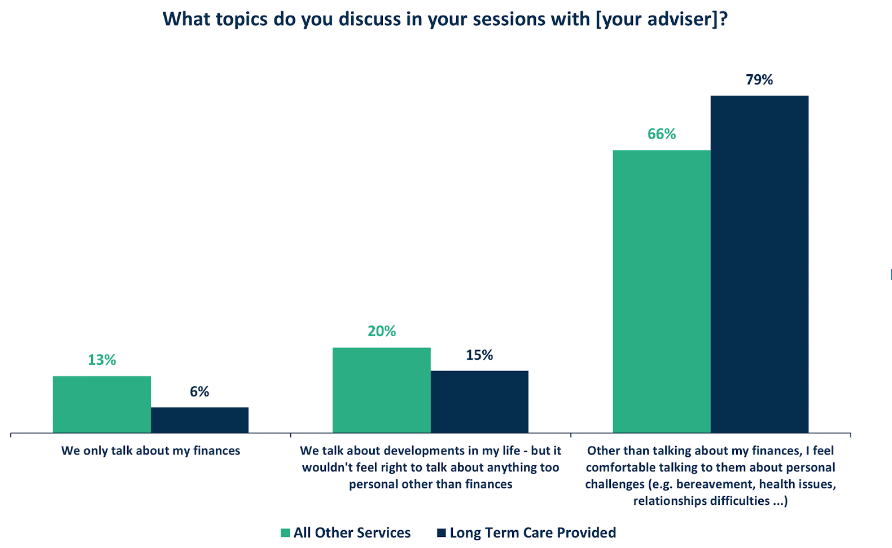
    Elevation data shows that clients who receive long-term care advice are more comfortable being open about their issues (13% more than average), and also feel more on track to meet their goals (5% more than average). It may be that their situation necessitates these clients being open about their needs. Others with new or temporary vulnerabilities may need more help to share their personal challenges.

3. Make risk understandable

Everyone has a different understanding of risk based on their experiences and circumstances. Vulnerable clients may find it harder to understand risk so try to use explanations your client will understand. It’s critical that clients understand risk, so ask them to play back to you key points to make absolutely certain they understand.

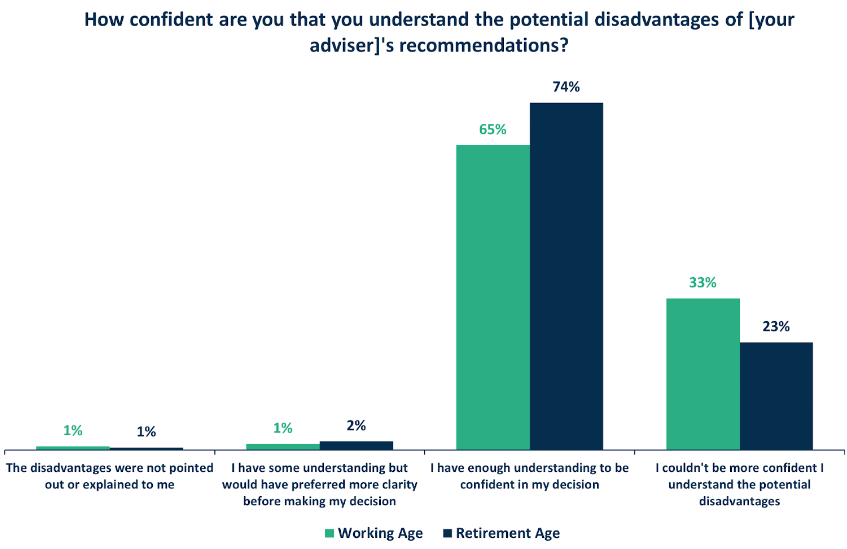
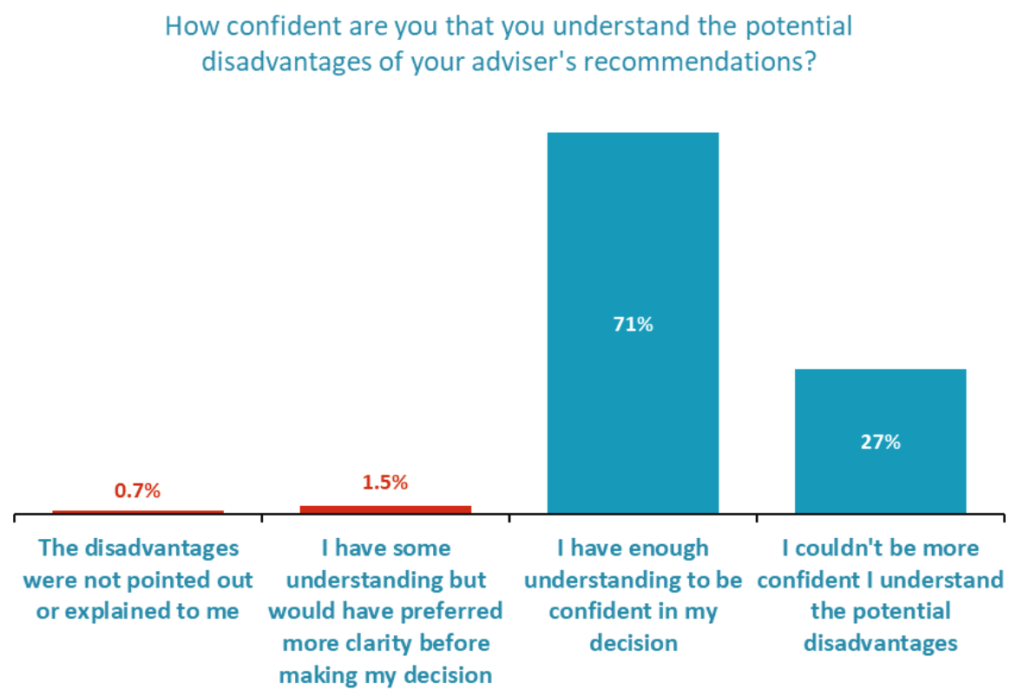
Both the importance of risk, and understanding of it, changes with age. Elevation data shows that although clients over the age of 65 feel they have enough information to make decisions, extra care is needed when dealing with this age group. This group of clients are 10% less likely to say they “couldn’t be clearer they understand the potential disadvantages of the advice”. 

4. Communication

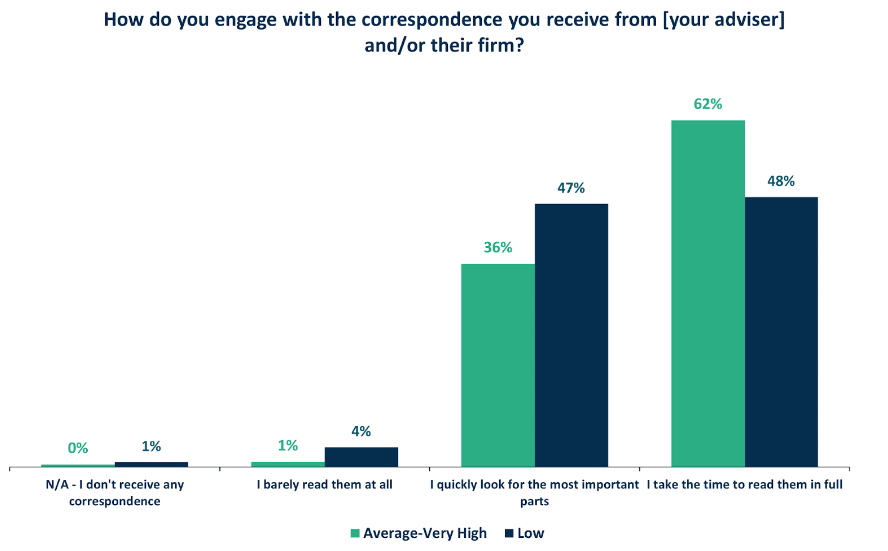
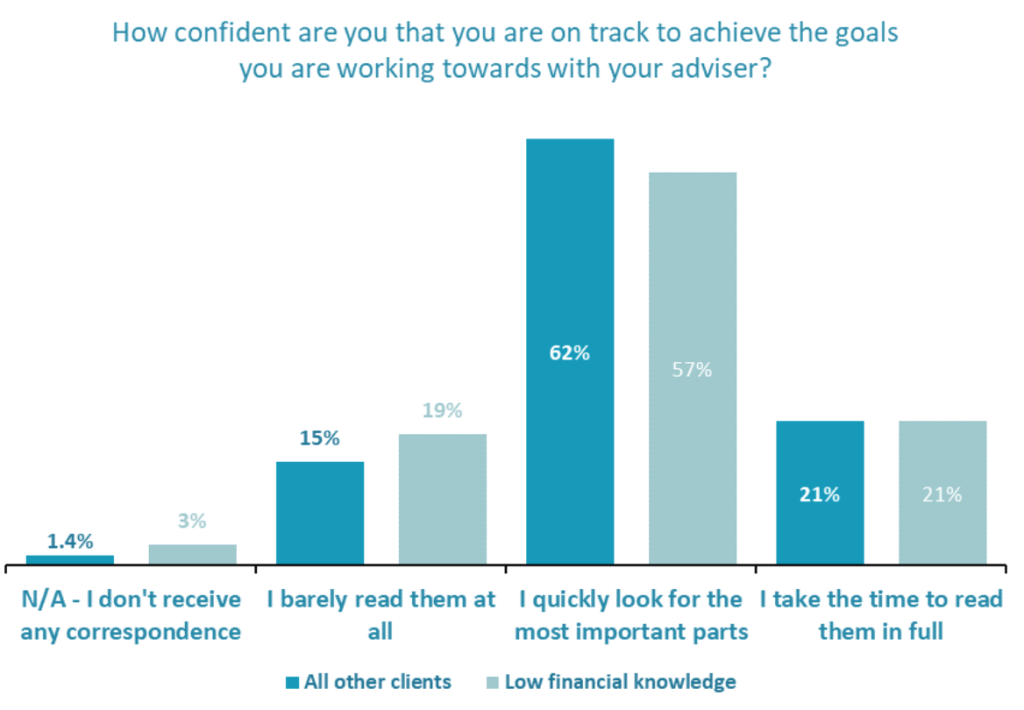
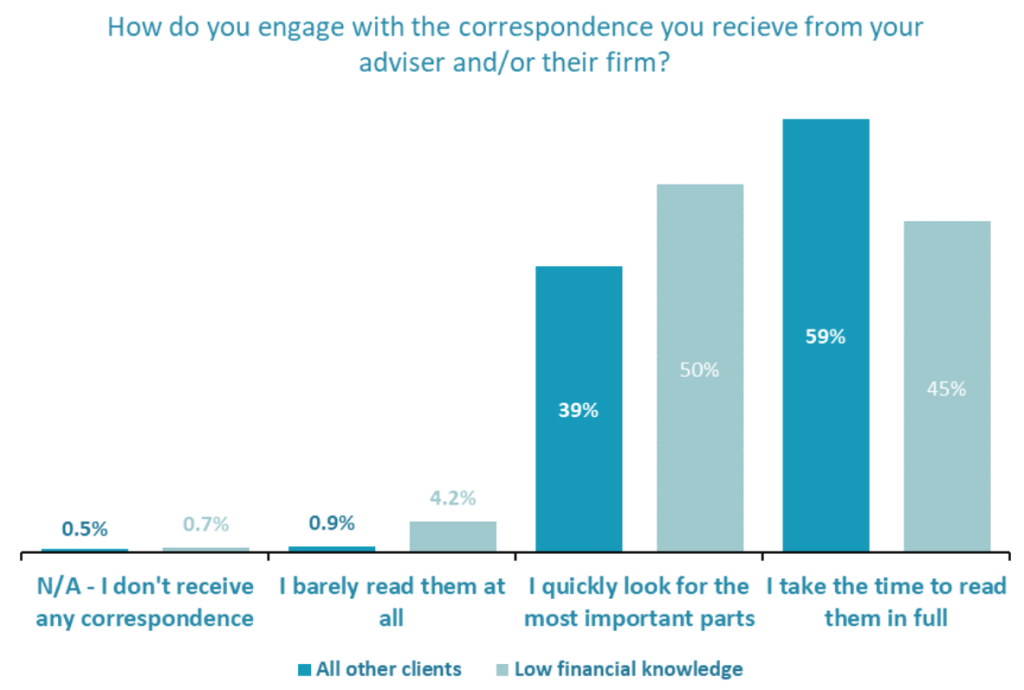
Clear and simple communication helps vulnerable clients to understand your advice. Elevation data shows that clients with low financial knowledge are less likely to read correspondence in full (48% vs 62% with moderate to high financial knowledge).

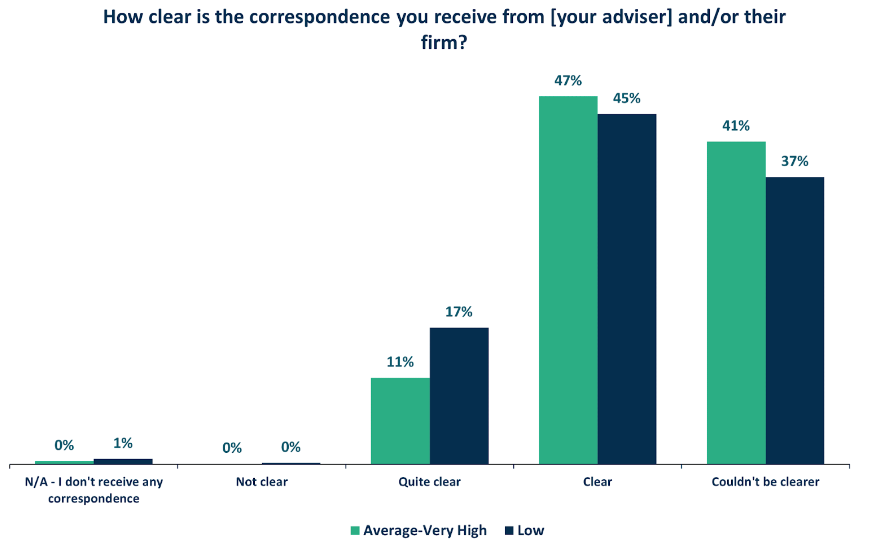
Crucially, they’re also less likely to understand what they read. Clients with low financial knowledge are 6% more likely to say they find documents only “quite clear” and 4% less likely to say correspondence “couldn’t be clearer”.

Make text easier to read by:

  • using plain language
  • avoiding jargon
  • breaking up large chunks of text with headers
  • bullet points
  • underlined text
  • charts
  • pictures

Tailor communication to the individual needs and preferences of your clients. If your client has poor eyesight, an audio recording of your report may be easier to understand. If they find it hard to concentrate due to adult ADHD, or similar conditions, a video recording of you explaining the advice could help. 

And don’t forget to stay in touch. Elevation shows clients over 65 are less likely to speak to their adviser more than once a year, so make sure to check in with them regularly.

5. Continuous improvement

Identifying and adapting to meet a client’s vulnerability is just the start. Review and evaluate your processes regularly to identify areas for improvement. This includes monitoring client feedback, outcomes, and complaints.

Meeting the needs of vulnerable clients has always been important for financial advisers. Consumer Duty now makes it critical to be able to show how you’ve met their needs and that they’ve received as good outcomes as non-vulnerable clients.

Using the five areas in this article, advisers can improve their vulnerable client processes and procedures.  Elevation makes it easier to record and report on your progress as you create a business that’s great for vulnerable clients to engage with.

___________________________

Elevation is an enhanced client survey from VouchedFor.  It uses client feedback to drive business growth.  Powered by 250,000 clients’ feedback, Elevation shows advice firms and advisers the specific actions they can take to meet the Consumer Duty and drive revenue growth.

Elevation offers completely private feedback, industry benchmarks, and a real-time Consumer Duty Report.  That’s why more than 1,000 advisers from leading advice firms have chosen Elevation as their preferred survey solution for Consumer Duty.  

To find out how Elevation can help you, or if you’re interested in getting content to help you meet your Consumer Duty, contact elevation@vouchedfor.co.uk

Consumer Duty will cost you money; how to boost your return on investment

There’s no getting away from it, Consumer Duty will cost you money.  

The new guidelines require firms to record the rationale, data collected, decisions made and actions taken as their whole business.

Savvy firms will introduce efficiencies to balance the cost.  But our data shows that by collecting and acting on client feedback in the right way, the average firm could unlock £1.6m additional lifetime revenue through more recommendations and better prospect conversion – massively boosting the return on investment.

Becoming more efficient

Firms will have to review their systems and processes for Consumer Duty. Now is the perfect opportunity to create efficiencies in your processes to offset costs. 

To increase efficiency, firms could look to:

  • Implement the right technology. Good, integrated technology can make your life much easier by automating tasks and passing data around, which saves rekeying. 
  • Delegate work. Ask clients to complete their own fact-find via a client portal. This saves time and allows you to focus on soft facts rather than data collection in your meetings.
  • Use risk-based compliance. Tune your process to look for anomalies rather than spending time reviewing everything. 
  • Establish a good data management strategy. You’ll need data for Consumer Duty reporting so use integrated systems which produce usable data reporting.

Get a positive ROI: how to make consumer duty work for you

Data from Elevation, our enhanced client survey, shows that embracing the principles of Consumer Duty improves the client experience, which leads to increased profitability. 

Consumer Duty says that advisers must “act to deliver good outcomes for consumers”.  Put simply: help clients achieve their goals. Unless you define a client’s goals, you can’t report on how you’ve acted to deliver them. 

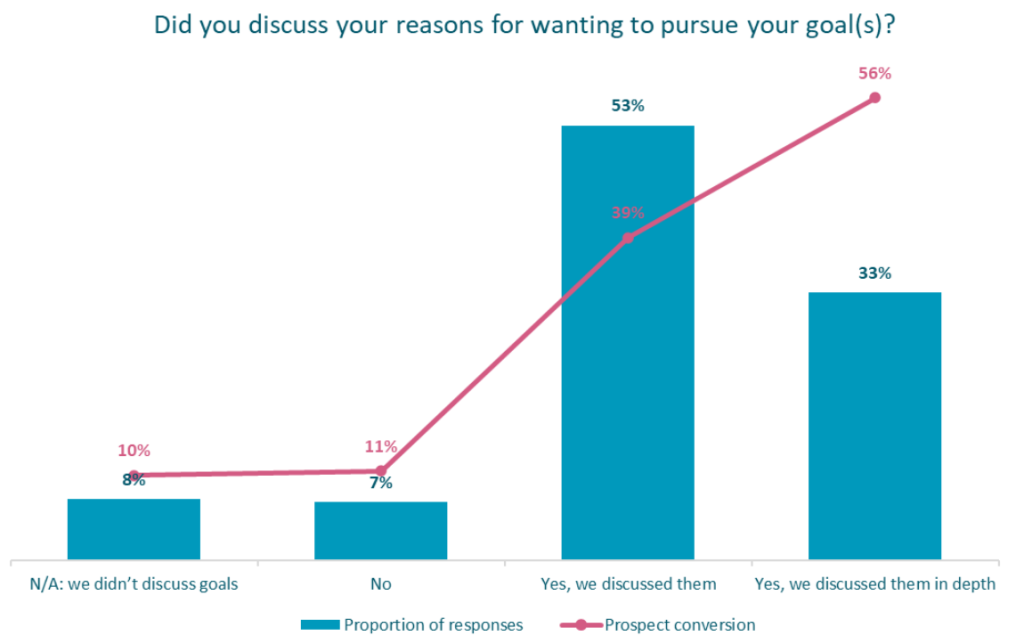
Focusing on a prospect’s goals and motivation makes it clear you’re on the case to help them.  In fact, Elevation data shows that focusing on a prospect’s goals leads to a 43% greater chance of them becoming a client.  

What you can do:

  • Keep asking “why” until you get to their real motivation
  • Repeat things back to the client to show you’ve listened and understood

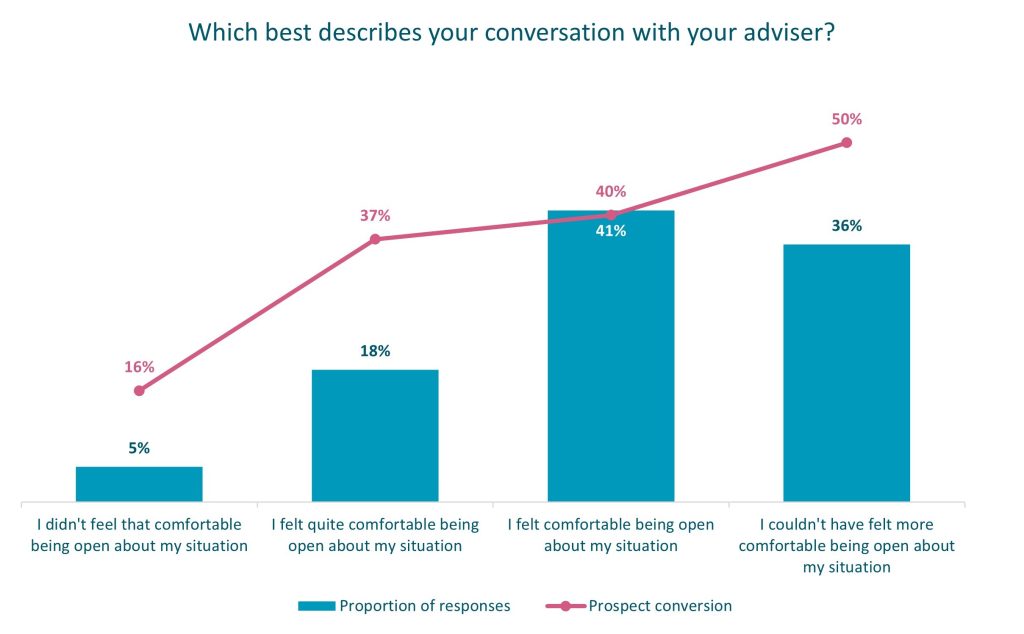
Clients need to be relaxed to tell you what they really want. If a prospect is comfortable opening up to you, they’re 25% more likely to become a client. 

What you can do:

  • Start conversations talking about your client’s goals and motivations, rather than money.
  • Use “what are you looking to achieve” rather than “how can I help” – this focuses the conversation on goals rather than transactions.

Get these two areas right and you’ll not only meet Consumer Duty, but you will also increase your conversion rate by over 50%.

What about boosting client referrals?

The Consumer Understanding outcome requires that clients have the right information, at the right time, to make informed decisions.   Elevation data shows that clients who feel your communications “couldn’t be clearer” recommend you 45% more often than those who aren’t as certain.

What you can do:

  • Keep communications easy to read. Free online tools can tell you the reading age of text – the lower the better. Ensure you remove any sensitive information (names, addresses, etc) before using online tools. 
  • Write a summary on the first page of documents. This makes important information more accessible.

The Consumer Support outcome requires clients to be able to use their services as reasonably anticipated. A large part of which is being able to access their adviser when they need them. If your client feels you’re accessible, they’ll recommend you to 30% more. 

What you can do:

  • Be clear that your client can contact you whenever they need you (assuming your ongoing service includes this).
  • Reach out to clients just to say hello. Calling with no agenda shows that you can talk outside of formal meetings.

What gets measured gets managed 

Monitoring progress will keep advisers focused. To maximise the commercial opportunity in Consumer Duty, firms need to reset their KPIs to focus on client outcomes. 

An outcomes focus leads to a better client experience, which in turn drives increased recommendations and improved conversions. This means better profitability. 

Because Consumer Duty outcomes are so subjective, the best way to set and measure KPIs is through client feedback. 

This belief was the founding principle for our enhanced client survey, Elevation.

Powered by 250,000 clients’ feedback, Elevation shows advice firms and advisers the specific actions they can take to meet the Consumer Duty and drive revenue growth.

That’s why more than 1,000 advisers from leading advice firms have chosen Elevation as their preferred survey solution for Consumer Duty. 

Embrace Consumer Duty – it’s worth it

Becoming Consumer Duty ready will carry a cost. Yet, by doing it properly, you can improve your client experience and profitability. 

On average, advisers who apply all the insights from Elevation could earn 13 additional clients each year, worth a total lifetime value of £325,000. So for the average five-adviser firm, a better experience could unlock an incredible £1.6m.

To succeed, you’ll need to track your client experience. To find out how Elevation can help you, or if you’re interested in getting more content to help you meet your Consumer Duty, contact elevation@vouchedfor.co.uk

Delivering good outcomes: a new way of asking for feedback

Customer satisfaction is dead, long live client outcomes.

The FCA has placed delivering good outcomes at the heart of Consumer Duty, which comes into force at the end of July 2023. The new requirements will mean advisers need to forget everything they thought they knew about client surveys. 

So what should you be doing?

To gather meaningful answers, you must ask your clients the right questions, which will be tied to the four Consumer Duty outcomes:

  • Consumer understanding. Do your clients feel equipped to make good decisions based on the information you’ve provided? Is information clear and received at the right time?
  • Price & value. Do your clients feel that they’re receiving value from their products and services (including your advice)? 
  • Products & services. Are products and services appropriate and meeting your clients’ preferences?
  • Consumer support. Do your clients feel like they can access their products and services as reasonably expected? This should include any special requirements or personal preferences on how they prefer to engage. 

In this article, we cover the type of questions you should be asking, how often you should ask them and what to do with the feedback you receive.

But first, a change to the advice process is also required. Advisers must clearly define clients’ goals. Without a defined outcome, it’s impossible to know if your client is on track to achieve it.

Customer satisfaction is dead, long live outcomes-based questions

To get the information you need, questions should:

  • Be based on the 4 Consumer Duty outcomes
  • Obtain how confident the client is feeling about achieving their goals

Use multiple choice questions rather than “free text”. This will make the responses easier to collate across the business. A Likert scale (strongly disagree to strongly agree) is easy for clients to relate to, so write your questions with this in mind.

Don’t forget you’re asking how a client feels. This is subjective rather than objective, but it is your client’s reality. Avoid being defensive if you receive negative feedback. Take it as valuable insight on how to improve. 

You should set acceptable answer ranges for each question before sending out surveys. This makes it easier to spot issues when the responses come in.

How often should you ask for feedback?

Obtaining client feedback should be a continuous process, not just after a product sale. Regular feedback allows you to keep track of your clients’ feelings and identify any issues quickly. The frequency of feedback depends on your risk appetite, but once a year probably isn’t enough. 

Gathering feedback from prospective clients is not only important for Consumer Duty – which applies to the whole consumer journey, including before they become a client – it’s also commercially beneficial for you.  Surveying prospects shows you take feedback seriously and increases the likelihood of them becoming clients. 

Elevation, our enhanced client survey, collects data after all prospect meetings, initial client meetings, and then after each annual meeting. These regular surveys keep your finger on the pulse of your clients, allowing you to identify and resolve issues quickly.

What to do with the responses

If you’ve asked the right questions, you’ll get valuable insights from the data. But what should you look for?

Trends and patterns at business and adviser level can help identify issues. Look out for:

  • Decreasing conversion rates – this could be either a proposition or adviser issue
  • Large differences between feedback for advisers – more adviser training could be required
  • Falling scores in one area –  review your processes in that area to look for improvements
  • Falling scores overall – something has changed in your business. You should investigate internally and reach out to clients for more detailed feedback 

You should also look for survey responses outside of your predetermined acceptable answer range. These will act as markers of risk and could mean rapid action is required.

Elevation helps to spot those trends and patterns through clear reporting, at both firm and adviser level. Covering both Consumer Duty and client experience, Elevation provides a clear picture of your business.

A low response rate shows poor engagement which should be acted on. Making feedback requests regular, and including them in your conversations, shows you value feedback and will increase response rates. 

Making data-driven decisions also gives you a competitive edge by reducing intuition and guesswork. This approach is proven to lower risk and improve commercial decisions. 

Turning Feedback into Action

Once you’ve analysed your client feedback data, it’s time to act. Defining acceptable answer ranges before surveying your clients makes it easy to hold yourself accountable to act on the data you get back.  

If responses fall outside of your acceptable range, it could highlight risk or otherwise suggest that you’re falling short of the Consumer Duty. 

Acting on your client feedback is a positive step to evidence how you’re meeting Consumer Duty.  Be sure to record:

  • The data which prompted the change
  • What you’re going to change
  • The anticipated outcome
  • The date you’ll review the situation 

Measuring against defined success criteria will help determine if changes have been effective. 

Communicate the changes you’ve made, or haven’t made, to your clients. This demonstrates your commitment to improving their experience and increases the chance of them responding to future survey requests.

Acting on feedback, and being transparent in what you’ve done, builds trust and client advocacy. You’re also working towards creating better outcomes in line with Consumer Duty.

Creating your feedback strategy 

Regularly obtaining, and acting on, client feedback is essential to every firm’s Consumer Duty strategy. But asking the right questions, regularly, is crucial. 

Here are four actions to kickstart your client feedback strategy: 

  1. Use a client survey with questions aligned to the 4 Consumer Duty outcomes
  2. Send surveys regularly, with additional ad-hoc surveys where issues are identified 
  3. Make changes based on data, and track if they’ve been effective 
  4. Communicate the changes you’ve made to your clients

___________________________

Elevation is an enhanced client survey from VouchedFor.  It uses client feedback to drive business growth.  Powered by 250,000 clients’ feedback, Elevation shows advice firms and advisers the specific actions they can take to meet the Consumer Duty and drive revenue growth.

Elevation offers completely private feedback, industry benchmarks, and a real-time Consumer Duty Report.  That’s why more than 1,000 advisers from leading advice firms have chosen Elevation as their preferred survey solution for Consumer Duty.  

To find out how Elevation can help you, or if you’re interested in getting content to help you meet your Consumer Duty, contact elevation@vouchedfor.co.uk

Are you ready for Consumer Duty?  Top advice firms share 7 key steps to success

Are you ready for Consumer Duty?  Top advice firms share 7 key steps to success

With the implementation deadline for Consumer Duty now just six months away, we asked three firms what they’re doing to prepare for success.

Whatever their level of readiness, all the firms spoke to the functional and cultural changes required, with the clearest message of all being, ‘START NOW.’

 With six months to go, what do you need to know? 


1. Don’t panic

Implementing Consumer Duty can seem daunting. It’s a big piece of legislation. However, it’s really “just an iteration from the FCA to raise and better define standards,” says Caroline Cochrane, from Verity Financial Planners, so the advice is not to panic. Caroline has been an adviser for over 30 years and isn’t worried by the new Consumer Duty requirements.

This was echoed by Morven Grierson, Compliance Director at MKC Wealth, who says, “Consumer Duty gives us the formal mandate to do everything we want to”. MKC Wealth was founded in 2022 with Consumer Duty in mind by ex-Quilter director, Dominic Rose.

Breaking work down into smaller tasks can help stop you feeling overwhelmed. “It’s about getting that work into bite size chunks,” says Thomas Court, Compliance & Policy Support Officer at Leeds-based consolidator and advice firm, Progeny. “If you haven’t started [preparing for Consumer Duty], start now. A journey of a thousand miles starts with a single step”.

Morven agrees with the approach of chunking work. “The 4 outcomes are broken down nicely into your proposition so you should be able to do a really clear gap analysis for each of the outcomes”. 

There are online resources available to help. Thomas recommends watching the FCA’s webinars and using material from compliance support services.  

“If you’re part of a network, adopt their rules – you have to trust they’ll get it right” says Caroline. “If you’re directly authorised, take the guidance from compliance support providers as a minimum and decide if you want to do more”. 


2. Be prepared to show your workings

Possibly the biggest change imposed by Consumer Duty is having to “show your workings”. Most advisers provide great financial advice. Consumer Duty isn’t going to change that, but it will require firms to better document why they provided that advice, and how they’ve confirmed afterwards that it was effective. 

All three firms are planning to use their back-office systems to hold data. “We’re planning to make a lot more notes in our back-office system [Intelliflo Office],” says Caroline, ”both in the meetings and to record the outcomes”. 

Having recently moved to Curo by Time4Advice, Thomas says, at Progeny, “we’re working with the departments on what evidence they have and what it’s showing. The MI is only as good as the input”. MKC Wealth uses WealthCraft (Morningstar) as their back-office system and will record Consumer Duty data there.


3. Think about what data you’ll need 

Data collection has historically been limited to advice suitability and customer satisfaction. Consumer Duty runs on feedback, therefore gathering data from all processes will be required. How and when to review the data is a key decision. Like most firms, the three we spoke to were currently undecided on their data-review strategy.

Many measures are subjective, so the best feedback is directly from clients. MKC Wealth uses Elevation, a new system from VouchedFor, to collect feedback from its clients. “It’s too easy to get embroiled with internal management informationI. What does the client think about it?” says Morven.

Firms using Elevation will soon be able to create bespoke alerts when feedback shows particular markers of risk. All three firms plan to use technology, as well as human interaction at annual reviews, to gather data. 

Gathering regular feedback will help with Consumer Duty. Benchmarks from Elevation show that only 24% of firms currently invite regular client feedback. Moreover, only 7% of firms ask prospective clients for feedback, which Thomas said Progeny is considering.


4. Review your technology

Technology will be key for most firms in their Consumer Duty strategy. We anticipate switched-on firms will adopt more technology, or better use their existing solutions, to remove some of the operational burden and free up resources. 

“Covid made us get used to technology – it was a gift”, says Morven. “Elevation is a really great way of gathering data from our clients. [VouchedFor] does the reporting for us so they take some of that operational burden off our hands”.

Whatever technology you currently use, now is the right time to review it with the reporting requirements of Consumer Duty in mind. 


5. Segment your clients for communications

The Consumer Understanding outcome states customers should be “given the information they need, at the right time, and presented in a way they can understand.” 

These requirements will test the communication plans of firms and could be difficult to implement without good client segmentation and technology to support the process.

“[We’ll be] trying to use tech to communicate in a more frequent and timely manner,” says Morven. “What we want to do this year is look at what’s happening around us. There’s the cost-of-living crisis, lots of concern about health and wellbeing and uncertainty about our country’s future. All this stuff spooks our clients. If we’re not reassuring our clients at the right time, that’s a problem”.

Good communication reassures clients and the only way to be sure they’ve understood is to ask them. Currently there’s room for improvement, as Elevation data found that 59% of clients felt communications from their adviser “could be clearer”. 


6. Embed Consumer Duty at every level of the organisation

The FCA is clear that Consumer Duty is for everyone, not just compliance, so everyone in a firm should understand the requirements and the part they play.

According to Thomas, Progeny has made Consumer Duty a “business project” that is everyone’s responsibility. “We’ve done training with our senior leadership team and it’s now filtering that down”.

Training is also on Morven’s mind at MKC Wealth, “We’re currently looking at our training plans for advisers. Are advisers getting under the bonnet with clients or are they just skimming the surface? If we can…produce great financial plans that really resonate with the client, then that means that client sticks with us.”

Firms must ensure that all areas of the organisation know how the Consumer Duty affects their role, and should have a plan in place to provide training or information relevant to each discipline.


7. Take time creating effective vulnerable client processes

Consumer Duty requires firms to ensure (and evidence) that potentially vulnerable clients receive outcomes as good as non-vulnerable clients. 

Caroline feels the need to keep better records. “We’re going to be reviewing and categorising all our [existing] clients as vulnerable or not, as we’ve not been recording this on every file until now. We’ll also be updating our processes to show how vulnerable clients get the same service [as non-vulnerable clients] and record everything in notes.”

Vulnerability is also on Morven’s mind at MKC Wealth. “We’re going to make sure we segment or focus on these clients so that they are being looked after the right way.” 

Elevation allows firms to segment survey responses from potentially vulnerable clients so that you can quickly and easily see how they rate their outcomes compared to non-vulnerable clients. It also allows custom definitions of vulnerability to match your internal definition.


The benefits of getting it right

Consumer Duty is going to mean change for firms, however, there’s a real opportunity to improve your business. The additional feedback is a great way to broaden and deepen client relationships.

By using client feedback to optimise your processes, and the client experience, you can increase how valued your clients feel. Thomas, from Progeny, says, “If we help our clients, that should mean our clients become advocates and the business grows. By treating clients as they should be treated, they’ll tell others about us.”


___________________________

Elevation, from VouchedFor, uses client feedback to drive business growth.  Powered by 250,000 clients’ feedback, it identifies which factors make the biggest positive difference to client experience, and uses carefully engineered questions within a client survey to reveal how advice firms are tracking against them.


Elevation helps you drive advocacy from existing clients, improve conversion of prospective clients, and mitigate risk by identifying issues early.  It can also form part of your ongoing response to the Consumer Duty.


To find out how Elevation can help you, or if you’re interested in getting content to help you meet your Consumer Duty, contact elevation@vouchedfor.co.uk

Consumer Duty outcome 4: 3 ways to show you really support your customers

The fourth outcome of the Consumer Duty is ‘Consumer Support’.  Firms are required to support clients all the way through their relationship so they can “consistently get the full benefit of the product and services they have purchased without unreasonable barriers”.  In this article, we offer three simple steps firms can take to nail this part of the Consumer Duty.

Advisers have four ‘outcomes’ to consider under the FCA’s new Consumer Duty regulations: products and services, price and value, consumer understanding and consumer support.

This article, concluding our series on the four outcomes, looks at ‘consumer support’.  The FCA requires that clients can get the full benefit of products and services they have bought, throughout their relationship, without unreasonable barriers.

So, what does this mean?

According to FCA research, customer support typically declines after a client has bought a product. So, this part of the Consumer Duty is designed to ensure clients are not forgotten after they have signed on the dotted line.  Instead, advisers are expected to maintain – and show they have maintained – the same level of client support throughout their entire relationship.

Elevation has analysed over 250,000 clients’ feedback to identify three simple proof-points for advice firms to show how they’re rising to meet the ‘consumer understanding’ outcome of the Consumer Duty. 

1. Be accessible to clients

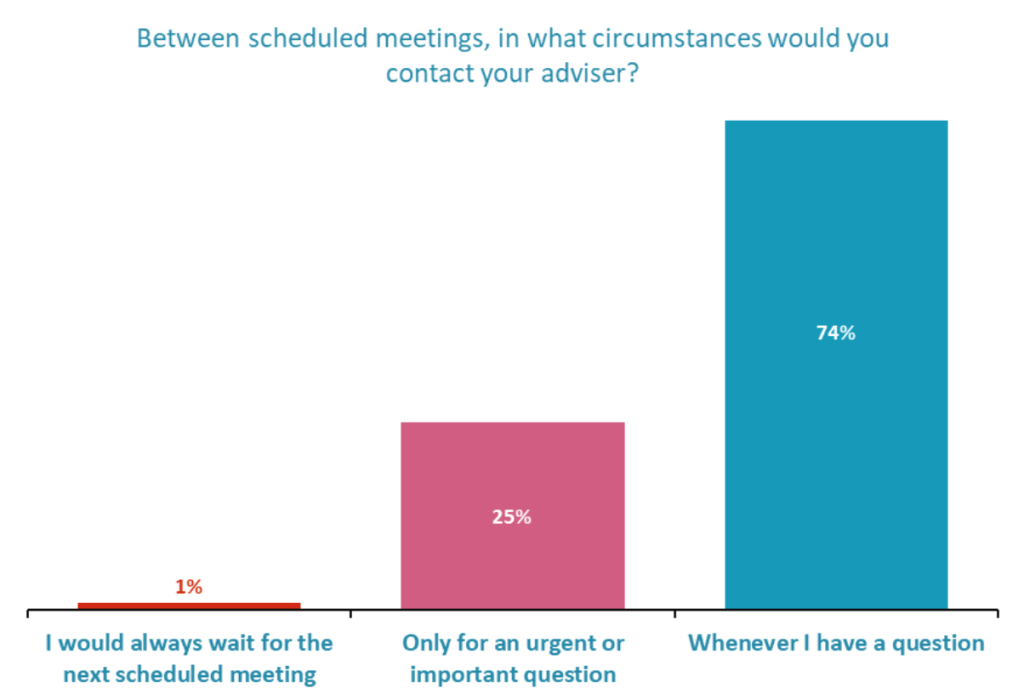
One of the ways advisers can demonstrate they are providing a consistent level of support to all their clients is by showing that customers have access to their adviser ‘without undue hindrance’.  To help, Elevation asks clients how comfortable they feel contacting their adviser between scheduled meetings.

The data is positive, with three in four clients saying they contact their adviser whenever they have a question.  Perhaps this is unsurprising, as many advisers have a strong personal relationship with their clients.  But there is still an opportunity here, as one in four clients remain hesitant to reach out to their adviser proactively.

Advisers could address this by communicating regularly with clients, such as by newsletters or emails, and inviting clients to get in touch with questions.  They could also offer clients a breadth of channels to contact them on, including a client portal, or even SMS or WhatsApp.

2. Identify clients who need extra support

The FCA makes it clear that a ‘one-size-fits-all’ approach is not sufficient.  Firms should identify clients who need different levels of support.  For example, when they are “dealing with non-standard issues, and customers with characteristics of vulnerability”.

The onus is on the firm (rather than the client) to consider where vulnerability issues might arise.  This might include a client experiencing relationship difficulties, bereavement, or health issues, or with a lower understanding of financial information.  Elevation data uses a combination of different data points to identify clients in vulnerable circumstances, including a client’s level of financial knowledge and whether they received advice about long-term care.

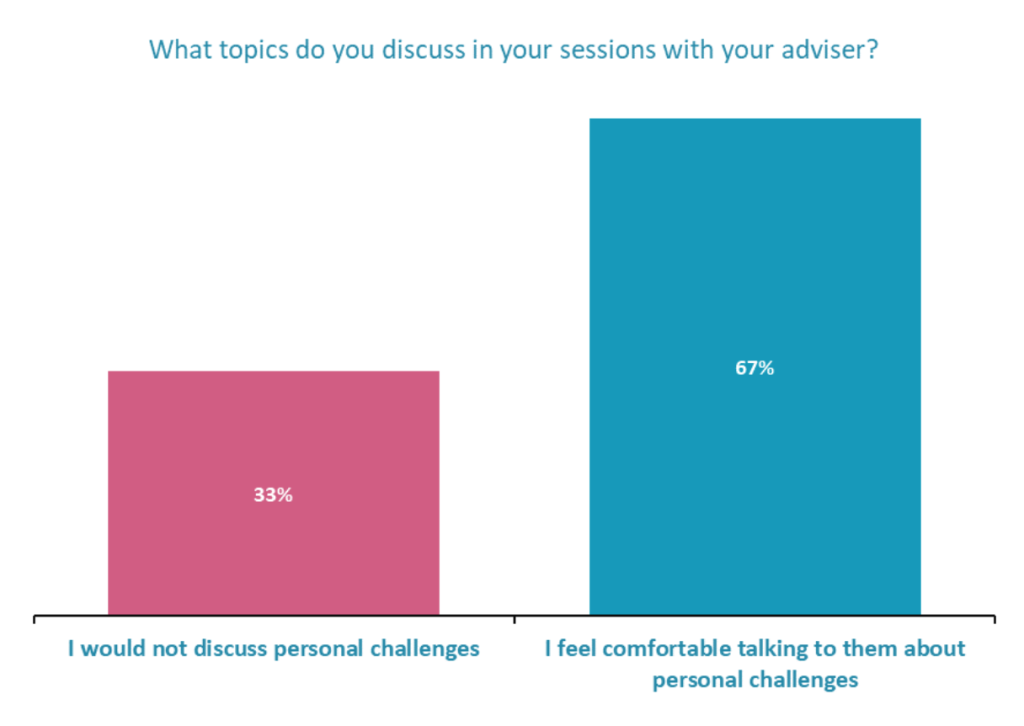
The good news from the Elevation data is that two thirds of clients feel comfortable talking to their adviser about personal challenges; without this, it is hard to identify vulnerability.  The opportunity for improvement with the remaining third is clear.  In the first article in this series, we showed that regular conversations with clients are essential to make sure they are offered the right product or service for them.  Speaking regularly also helps advisers identify characteristics of vulnerability that may apply to their clients

3. Confidence in service

The third proof-point for firms to show the FCA that they’re meeting the Consumer Duty is that clients have confidence in the service they receive.  The FCA requires firms to “regularly monitor whether they are providing an appropriate standard of support that meets the needs of retail customers’.  Elevation asks clients if they feel they’re on track to achieve their goals.

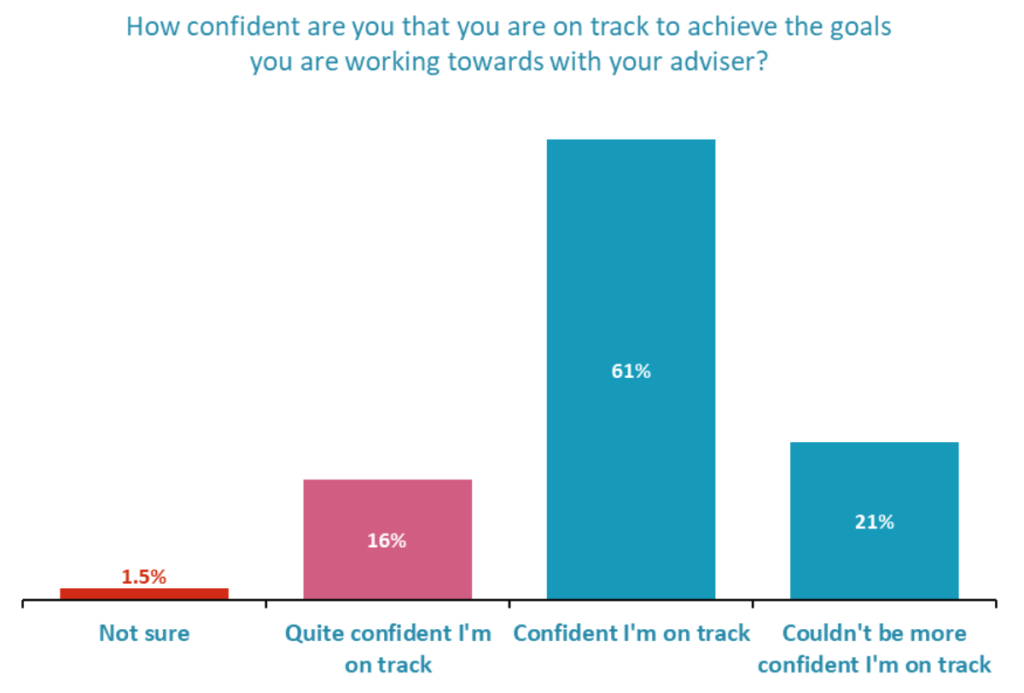
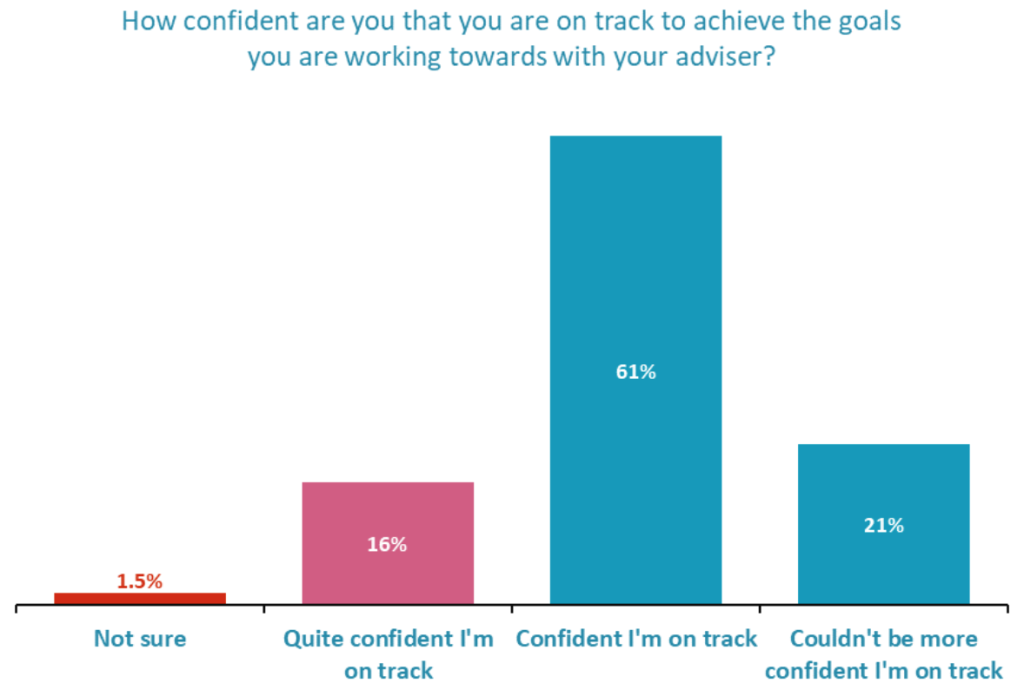
One in five clients (21%) say they “couldn’t be more confident” they are on track to meet their goals. That means four in five clients (79%) could be more confident than they are.  Asking this question regularly – and following up with those clients who are less than totally confident – can help to identify when clients’ needs (and their goals) have changed over time.

This is particularly important with clients who have a lower level of financial knowledge, which the FCA identifies as a characteristic of vulnerability.  Elevation data shows that these clients are less likely to feel confident they are on track to reach their goals. 

Where 61% of all clients feel confident they’re on track to meet their goals, this figure falls to 57% for clients with low financial knowledge.  Twice as many of these more vulnerable clients aren’t sure whether they’re on track, compared to the industry average.

So, to recap: the FCA requires that clients can get the full benefit of products and services they have bought, throughout their relationship, without unreasonable barriers.  Advice firms can show they’re on the case by being accessible to clients, identifying – and catering to – clients with specific needs, and monitoring their clients’ confidence in achieving their goals.


___________________________

Elevation, from VouchedFor, uses client feedback to drive business growth.  Powered by 250,000 clients’ feedback, it identifies which factors make the biggest positive difference to client experience, and uses carefully engineered questions within a client survey to reveal how advice firms are tracking against them.

Elevation helps you drive advocacy from existing clients, improve conversion of prospective clients, and mitigate risk by identifying issues early.  It can also form part of your ongoing response to the Consumer Duty.

To find out how Elevation can help you, or if you’re interested in getting content to help you meet your Consumer Duty, contact elevation@vouchedfor.co.uk

What, why and how – the 15 questions we keep getting asked about Consumer Duty

The Consumer Duty clock is ticking, as firms have until the end of July 2023 to be compliant. At VouchedFor, we’ve hosted a packed schedule of webinars to help firms navigate the Consumer Duty.

Based on the questions you’ve asked, here are answers to the 15 most commonly asked questions, to help you nail your response.

Put simply, the FCA believes that not enough firms are putting their consumers’ needs first.

The Consumer Duty is designed to ensure that consumers receive

  • communications they can understand;
  • products and services that meet their needs and offer fair value; and
  • the support they need, when they need it.

The Consumer Duty sets out that firms should put consumers at the heart of their business.

The duty is made up of:

A Consumer Principle:

‘act to deliver good outcomes for retail customers’.

Three ‘cross-cutting rules’, which firms should apply to everything they do:

  1. Act in good faith
  2. Avoid causing foreseeable harm
  3. Enable and support retail customers to pursue their financial objectives


Four outcomes which firms are expected to monitor and evidence:

  • Products and services
  • Price and value
  • Consumer understanding
  • Consumer support


There are also other important requirements relating to governance, vulnerability and monitoring.

The new rules are very significant, and they complement, rather than replace, existing regulation.

Many of the specific outcomes and rules are consistent with previous regulations (including PROD and TCF rules).

However, the Duty also contains overarching requirements around monitoring, vulnerability, culture, governance and accountability.

Advice firms will need to work harder to evidence outcomes, using the resulting data to drive all levels of organisational decisions.

This makes the new Duty a very meaty piece of regulation.

The first key milestone is that firms need to produce an implementation plan by 31st October 2022.

They then need to be compliant with the rules by the end of July 2023 for all new and existing services (they have another year for closed books or legacy products to be compliant).

Some key things to think about within your response.

  1. Create a taskforce to review and oversee the changes that will be required (processes, governance, documentation and culture). Interestingly, unlike regulation that has gone before, many firms choose a person not in Compliance to lead this.
  2. Identify business areas likely to be affected. For instance…your MI and data sources, SM&CR arrangements, value assessments, product governance, customer service, marketing and communications.
  3. Evaluate each area against the four Consumer Duty outcomes to identify priorities. This will expose gaps and highlight where you need more visibility.
  4. Create a plan, mapping out what you propose to do, by when.  How will you deliver, monitor and evidence each of the four outcomes?  The ability to evidence outcomes is essential. Firms should ask themselves, ‘Are we collecting the right data? What data do we need to measure outcomes?’
  5. Implementation.  What processes will ensure you review your plan and your performance against the Duty, and take action to address opportunities for improvement? How can you embed the Duty in your firms’ culture?

We’ve analysed the feedback of over 250,000 clients through our Elevation platform and, broadly, most clients are happy with their current experience. But there is opportunity to improve in areas like client understanding and evidencing value, which the Duty will help with.

The FCA has set out that the new Duty “will set higher and clearer standards of consumer protection across financial services and require firms to put their customers’ needs first”.

A notable shift in this most recent regulation is that the Consumer Duty, compared with what’s come before, is the move from what firms communicate to whether clients understand it.  For example, the FCA has previously required firms to be transparent about their fees, but it is now important to check that clients have understood those fees.

For example, Elevation asks clients how their advisers’ fees work; currently only 83% can give an answer.

It is likely that the biggest change for clients will be greater transparency of costs, improved clarity of communications, and better understanding of risk.

The Duty does contain special considerations for vulnerable clients.

For instance, it requires advice firms to tailor communications to characteristics of vulnerability. And to benchmark the experience of different client groups to ensure that clients in vulnerable circumstances achieve as good outcomes as other clients.

Elevation data shows that this is an important step forward for the industry.

First, because very few firms regularly benchmark outcomes between clients in vulnerable situations and others.

Secondly because clients in vulnerable circumstances give worse client experience scores than other clients.

For example, 4.2% of clients with low financial knowledge barely read correspondence from their adviser. This is four times higher than clients whose level of financial knowledge is average or high.

Most firms are in good shape and are delivering good outcomes for their clients.

Typically larger firms are further into their preparations but then have further to go, vs smaller firms.

Also, more financial planning focussed firms are closer to the requirements than purely investment focused firms.

Elevation data shows that most firms have work to do in areas like consumer understanding, evidencing value and embedding the right governance structure.

The commercial case is exciting.

There’s plenty of evidence that firms who embrace the Consumer Duty as more than a box-ticking exercise see significant improvements in business performance. They convert more prospects and receive more client recommendations.

For example, 63% of prospective clients who leave a 5-star first-impression review on our platform intend to become a client. This more than halves to 28% if they leave a 4-star rating.

Much of what keeps advisers on the right side of that line sits at the heart of the Consumer Duty.

For instance:

  • Discussing a customer’s needs and objectives is a key requirement of the Consumer Duty (especially within the Products & Services outcome).Prospects who say that the motivations behind their goals were discussed ‘in depth’ convert into clients at a rate of 59%.This drops to 43% where motivations were discussed, but not ‘in depth’. And to below 14% when goals or motivations were not discussed at all.
  • 27% of clients who say they ‘couldn’t be more confident’ they understand risk make an average 1.9 recommendations per year.That’s much more than the 1.1 recommendations from clients who say they have only ‘enough’ understanding of risk. And recommendations fall off a cliff for clients who don’t understand risk.

Our data shows that most clients are achieving good outcomes, but there are identifiable gaps.

Here are some of the top opportunities across the industry:

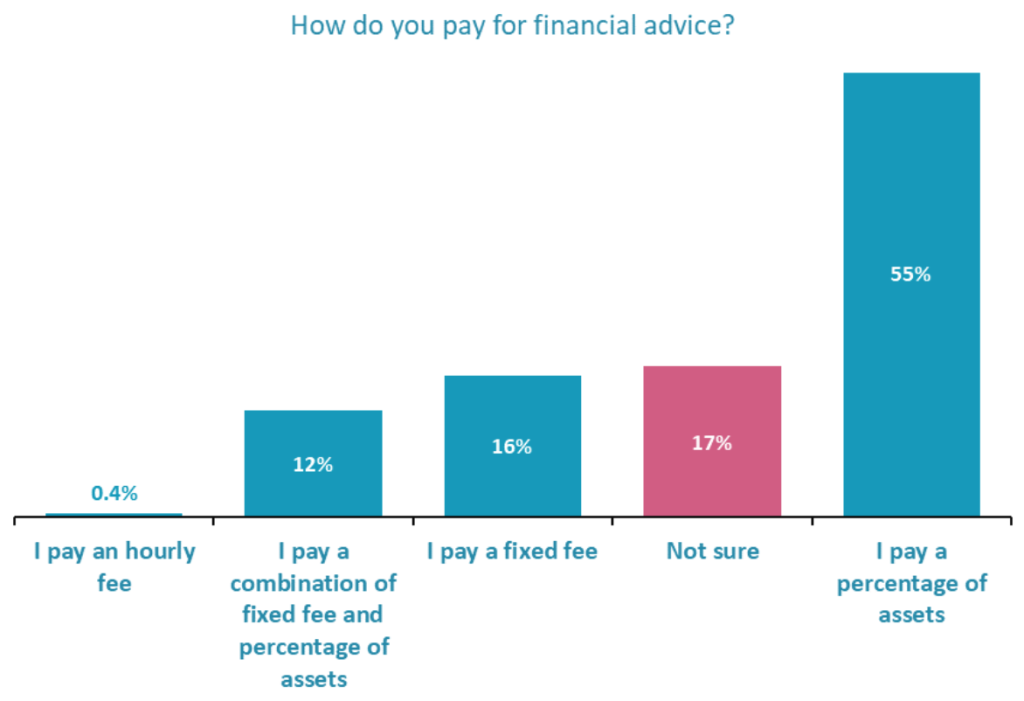
  1. The Consumer Duty requires advice firms to enable consumers to understand cost.One in six clients (17%) do not understand how they pay for financial advice.The picture is worse for prospective clients. Only one in three prospective clients (29%) understand how an adviser’s fees work after an initial meeting.
  2. The Consumer Duty requires firms to ensure fair value, and that the price that consumers pay is reasonable compared to the benefits.Yet our data reveals that 18% of clients are either not sure they are on track to achieve the goals they are working towards with their adviser or are only quite confident.
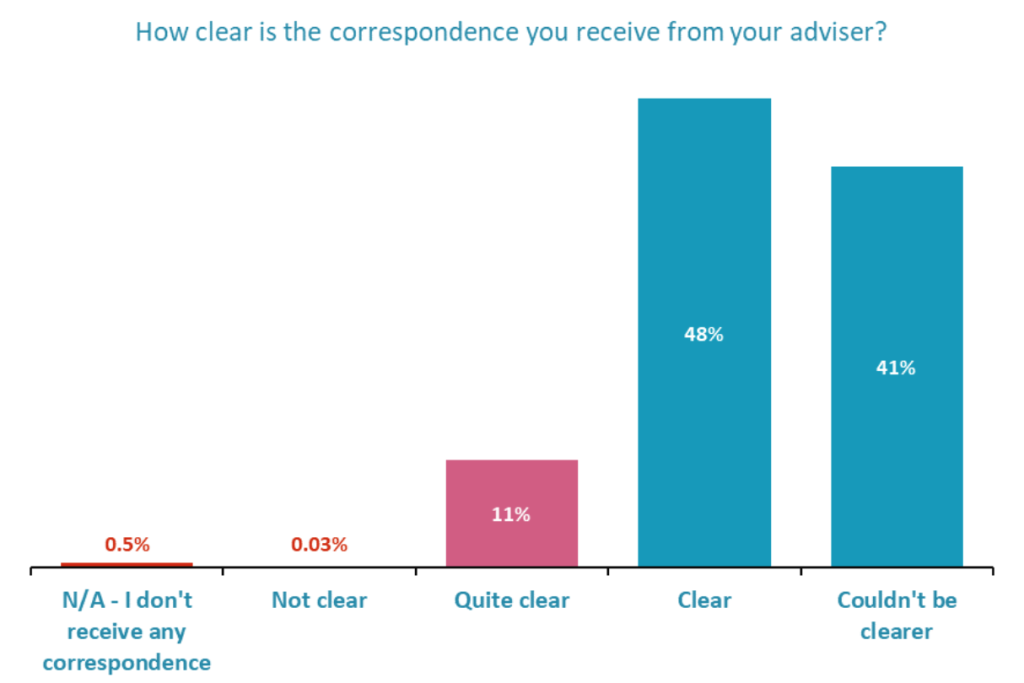
  3. The Consumer Duty requires firms to give consumers the information they need, at the right time, and presented in a way they can understand.Yet 59% of clients say that the correspondence they receive from their adviser and their firm could be clearer. Of particular concern, 1% of clients don’t receive any correspondence at all (or at least that is their perception).
  4. Lastly, the duty requires firms to test, monitor and evidence good outcomes throughout their customer journey.Collecting the right data here is key. Yet in a recent adviser survey, our Elevation team found that only 24% of advice firms regularly ask their clients for feedback and only 7% ask for feedback from all prospective clients.

It’s important to note that the Duty is not suggesting that ‘cheapest is best’. Instead, it requires firms to justify why they charge what they do.

Some of the data points that we collect to help firms show the value they offer clients are:

  • their average fees and how they compare with the industry
  • the proportion of their clients who feel confident they are on track to achieve their goals
  • the proportion of of their clients who feel they have full access to their adviser
  • their ‘value for money’ rating out of 5
  • the proportion of their clients who understand their fees, as it’s hard for them to assess value if they don’t


As an example, we work with a national advice firm which charges more than the industry average, but can demonstrate higher-than-benchmark scores for each of the above measures.

The Consumer Duty doesn’t express a view on what you charge, as long as you can justify it.

Potentially though, discounting fees could become a problem if two near-identical clients were paying significantly different fees for the same service.

At this stage, it’s too early to tell. However, we do know the following:

  1. The FCA knows it has to supervise and enforce this well or the Duty will fail. Almost all respondents to their consultation called this out.
  2. The FCA says it is not introducing any new regulatory reporting requirements at this stage. But has not ruled it out.
  3. The FCA says it will use insights and data to focus its policing efforts. And there is a greater availability of data than has ever been true in the past.
  4. The FCA says it will make periodic requests of firms for instance in asking to see Consumer Duty implementation plans and Board reports.


We think that the FCA is taking a ‘wait and see’ approach to policing this regulation. Rather than saying ‘cross X line and it will result in Y fine’ the FCA appears keen to see how firms respond to the Duty and then adapt their policing framework accordingly.

In a word: data.

Page 67 of the final guidance outlines some of the various data sources that the FCA recommends firms collect, including customer complaints, surveys, net promoter scores, focus groups and customer research.

Among these, unsurprisingly, we believe collecting the right consumer feedback is a must. You can’t be sure that someone understands something without asking them.

When we changed the question to ‘how do your adviser’s fees work?’ and only 83% of clients could give the right answer – a truer reflection of clients’ understanding.

For non-advised/execution only services, the FCA has stated that firms providing such services can assume that the customer’s financial objectives are purely the enjoyment and use of the product and service they have purchased (and any wider interests).

However, where the firm has a broader relationship with the client – one which gives them information that may indicate whether the product/service aligns with the clients’ financial objectives – they need to take that into consideration.

For example, if a client was considering a high-risk product, or one with a long maturity rate, and the firm understood from its advisory relationship that the client planned to retire soon, then the firm might seek to highlight to that client the relevant risks associated with such a product.

Client feedback is one of the key data points the FCA recommends that advice firms collect. And client feedback is our area of expertise.

Advice firms can use our new Elevation platform (think of it like a much more powerful client survey) to manage their ongoing response to the Consumer Duty in a few ways:

  1. Elevation collects feedback at key stages of the customer journey, helping you monitor and evidence outcomes.
  2. Elevation helps you identify risks. For instance, clients who don’t feel they are getting value or don’t understand your fees, enabling you to reach out and give them the support they need.
  3. Elevation’s intuitive dashboards share key client experience data at firm and adviser level, which helps with the governance requirements of the Consumer Duty.
  4. Elevation produces a real-time Consumer Duty Report that shows you (and the regulator) how you are doing against the four Consumer Duty outcomes. It also shows how you compare with the industry.
  5. Data from Elevation and the Consumer Duty Report can be shared with the board as part of the board report required by the Consumer Duty.


Further to this, Elevation helps you tap into the huge commercial opportunity that comes with embracing the Consumer Duty properly. Specifically, it shows you the most impactful things that you and your advisers can do to increase prospect conversion, generate more recommendations and reduce risk.

Elevation, from VouchedFor, uses client feedback to drive business growth. Powered by 250,000 clients’ feedback, it identifies which factors make the biggest positive difference to client experience, and uses carefully engineered questions within a client survey to reveal how advice firms are tracking against them.

Elevation helps you drive advocacy from existing clients, improve conversion of prospective clients, and mitigate risk by identifying issues early.  It can also form part of your ongoing response to the Consumer Duty.

To find out how Elevation can help you, or if you’re interested in getting content to help you meet your Consumer Duty, contact elevation@vouchedfor.co.uk

Consumer Duty outcome 3: Do your customers really understand you?

The third outcome of the Consumer Duty is ‘Consumer Understanding’, where firms are required to communicate in a way that, “in addition to being fair, clear and not misleading, is also understandable and facilitates informed consumer decisions”. In this article, we explain what this means and show where firms could strengthen their communications.

Advisers have four ‘outcomes’ to consider under the FCA’s new Consumer Duty regulations: products and services, price and value, consumer understanding and consumer support.

This article covers the third of these – ‘consumer understanding’ – which requires that any communication from advisers, “in addition to being fair, clear and not misleading, is also understandable and facilitates informed consumer decisions”.

So, what does this mean?

Put simply, existing regulation sets expectations for what firms communicate.  The new Consumer Duty focuses on whether clients understand it.

Advisers shouldn’t assume that any client will engage with, and act on, generic information.  This is especially important for clients in vulnerable circumstances.

Instead, communications should be tailored and targeted to meet different customer needs.  But how do advisers understand whether their communications have hit the mark? 

Elevation, a VouchedFor platform, gives firms answers to three key questions to show if they’re on track to meet the ‘consumer understanding’ outcome of the Consumer Duty:

1. Do clients read your communications?

2. Is your correspondence clear?

3. Have your clients understood it?

Do your customers read your communications?

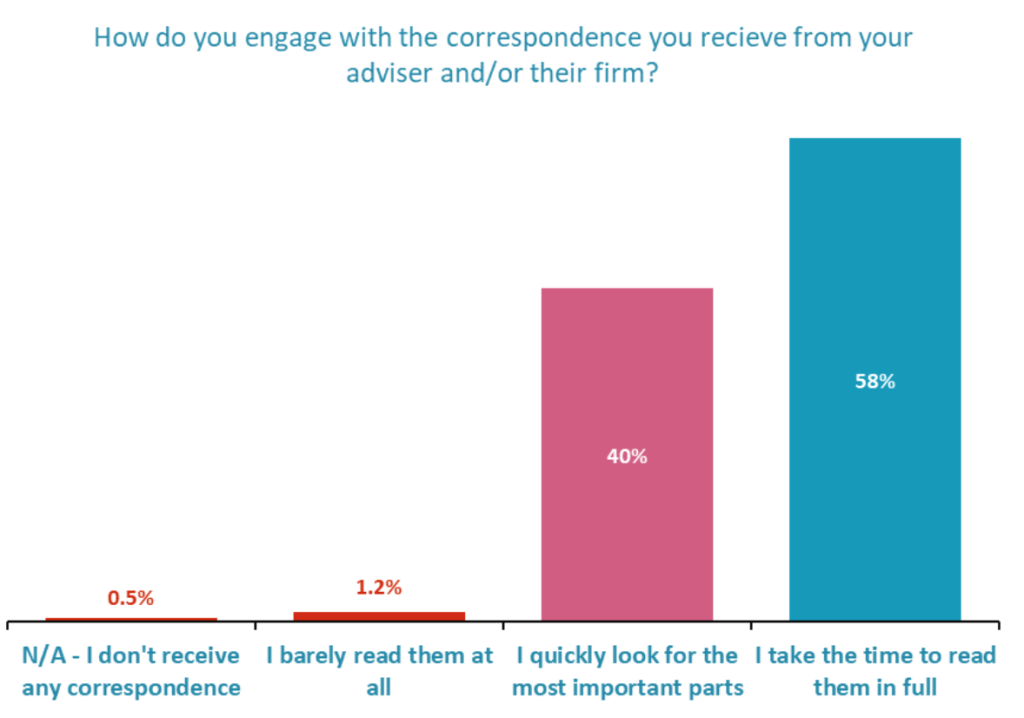
In reality, only a narrow majority of clients – three out of five – take the time to read correspondence from their advisers in full, Elevation shows.  Two in five quickly skim read for the most important parts, while 12 in every thousand barely read written correspondence at all.  Five in every thousand worryingly say they don’t receive written correspondence.

Firms may believe their documentation is ‘clear, fair and not misleading’, but not everyone is engaging with it as they might hope.  Can a consumer really make an ‘informed decision’ if they’re only skim-reading ‘for the most important parts’?

Given the reluctance of customers to engage with written correspondence, advisers need to rethink how they present information.  The FCA says that “firms should consider how the way in which information is presented…can help to improve or inhibit understanding”.  If customers won’t or can’t engage with what you’re sending them, there is no way to meet the ‘consumer understanding’ outcome of the Consumer Duty.

For customers in vulnerable circumstances, the importance of clear communication steps up a gear.  Elevation data shows that clients with low financial knowledge are four times more likely not to read their adviser’s correspondence.  Advisers should tailor communications to address the specific vulnerability characteristics of their clients.

Is your communication clear?

Communicating clearly is fundamental to good client service, but it is now also essential to demonstrate that your communications have been understood.  Otherwise, you will fall short of the FCA’s Consumer Duty rules. 

You need to measure the clarity of communication by identifying if clients understand the risk they are taking with recommended products, that they understand the fees they are paying, and that they are on track to meet their goals.

Elevation data is positive: most clients feel the communications they receive are clear.

Just over one in 10 show any hesitancy – that correspondence is ‘quite clear’.  However, this rises to one in six for clients in vulnerable circumstances.  

For all clients, there is significant risk in the outlying 1 in 100 clients who believe they don’t receive any correspondence at all or, if they do, feel it is not clear.

Have your clients understood your communications?

Monitoring understanding, and demonstrating it to the FCA, isn’t easy.  This is where Elevation can help.  In addition to monitoring client engagement with, and clarity of, your communications, Elevation highlights three specifics areas in depth:

1. Understanding of risk

2. Understanding of fees

3. Clients’ confidence of achieving goals


1. Does the client fully understand potential risk?

This is where there is some really good news, as nearly 98% of clients say they understand the potential risks or disadvantages of their adviser’s recommendations.  Around a quarter of these clients say ‘they couldn’t be more confident’.  However, 2.2% have insufficient understanding, and Elevation helps advisers identify these individuals to address the issue.

2. Does the client understand fees?

Here, Elevation data shows a significant opportunity for advice firms to rise to meet the Consumer Duty.  One in six clients say they are not sure how they pay for advice.  This falls short of the FCA’s expectations set out in the ‘Price and Value’ outcome.

3. Does the client feel that they’re on track to achieving their goals?

The FCA says that ‘Firms must test, monitor and adapt communications to support understanding and good outcomes for customers’. Positively, Elevation data shows that four out of five clients feel confident they’re on track to achieving their goals, with one in five saying they ‘couldn’t be more confident’ they’re on track. 

However, one in six clients said they were merely “quite confident”, and 15 in every thousand were unsure. These insights can help advisers adapt communications to improve these outcomes for customers and ensure they meet the Consumer Duty.

Are you conducting regular reviews?

Communicating with clients more frequently is another way advisers can improve their clients’ understanding of the different elements outlined above. More frequent communication also benefits clients and advisers when it comes to the Product and Services and Customer Support outcomes aspect of the Consumer Duty.

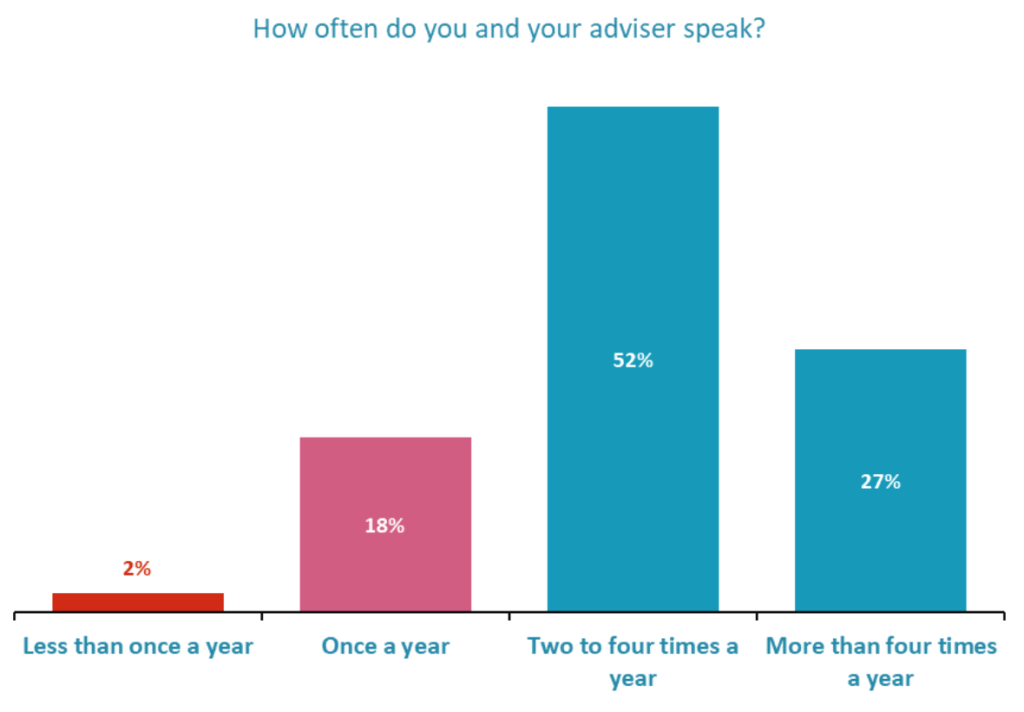
Advisers should consider how, and how often, they communicate with clients, as one in five clients speak to their adviser just once a year or less.  Depending on a client’s circumstances and needs, this may not be enough.


___________________________

Elevation, from VouchedFor, uses client feedback to drive business growth.  Powered by 250,000 clients’ feedback, it identifies which factors make the biggest positive difference to client experience, and uses carefully engineered questions within a client survey to reveal how advice firms are tracking against them.

Elevation helps you drive advocacy from existing clients, improve conversion of prospective clients, and mitigate risk by identifying issues early.  It can also form part of your ongoing response to the Consumer Duty.

To find out how Elevation can help you, or if you’re interested in getting content to help you meet your Consumer Duty, contact elevation@vouchedfor.co.uk